

Flagship Store Analysis
Fieldnotes from Seoul

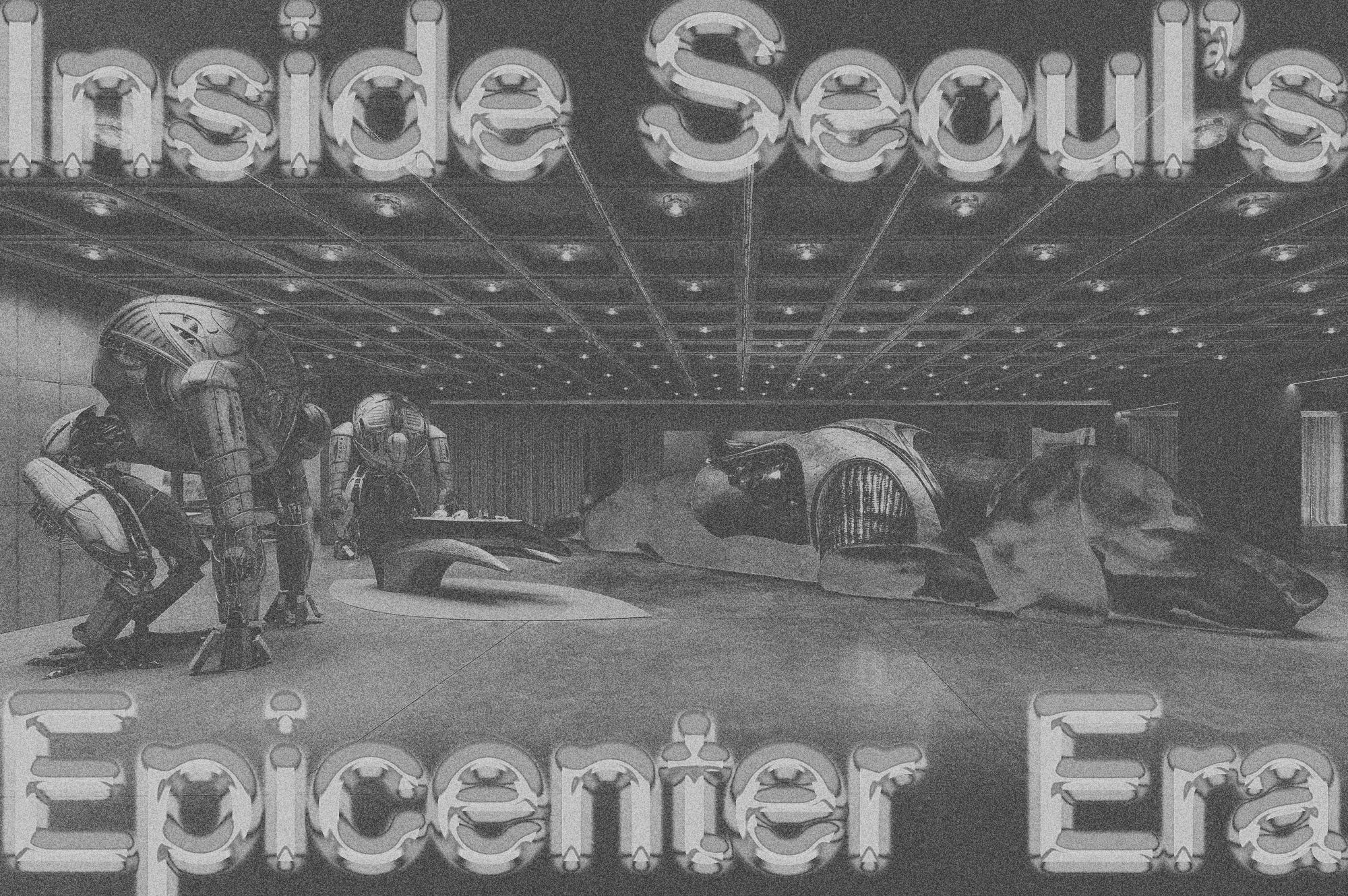
I recently got my grubby little hands on a rare copy of Projects for Prada by Rem Koolhaas, OMA/AMO. Filled with short essays, floorplans, and photos of boardroom lunches, the book lays out the innovation philosophy behind Prada’s flagship stores, and how brands should behave when they scale.
It opens with an ominous introduction:
“Indefinite expansion represents a crisis: in the typical case it spells the end of the brand as a creative enterprise and the beginning of the brand as a purely finance enterprise.”
Koolhaas argues that expansion happens on two axes: quantity and quality.
On one axis, there are simply more stores. On the other, there are bigger, louder, more symbolic ones, in the form of flagships. Each has its own risk. Too many stores, and the brand loses aura through repetition. Too much scale, and you get what he calls the flagship syndrome: a bloated accumulation of obvious brand cues that locks the brand into a single, over-explained identity.
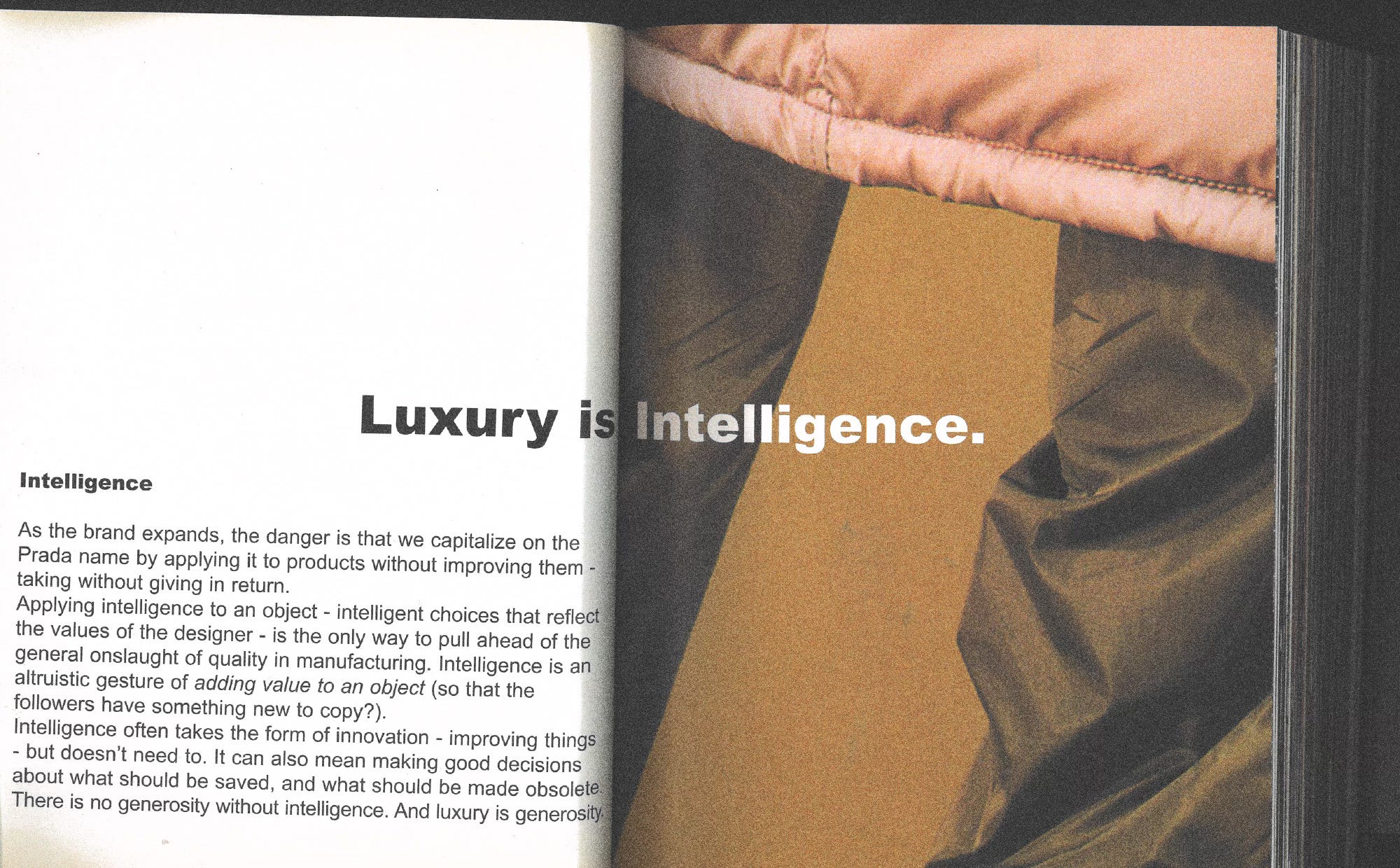
Koolhaas’s solution is the epicenter store, a flagship designed not to summarize the brand, but to destabilize it. Koolhaas describes the epicenter as a “conceptual window”: a place where future directions are tested and broadcasted, quietly reshaping the rest of the retail network downstream. It interrupts fixed ideas of what the brand is by refusing to let it settle into a definitive identity.
Much like a museum, the epicenter can hold both permanent collections and rotating exhibitions. This flexibility lets the brand evolve in the consumer’s mind without losing coherence.
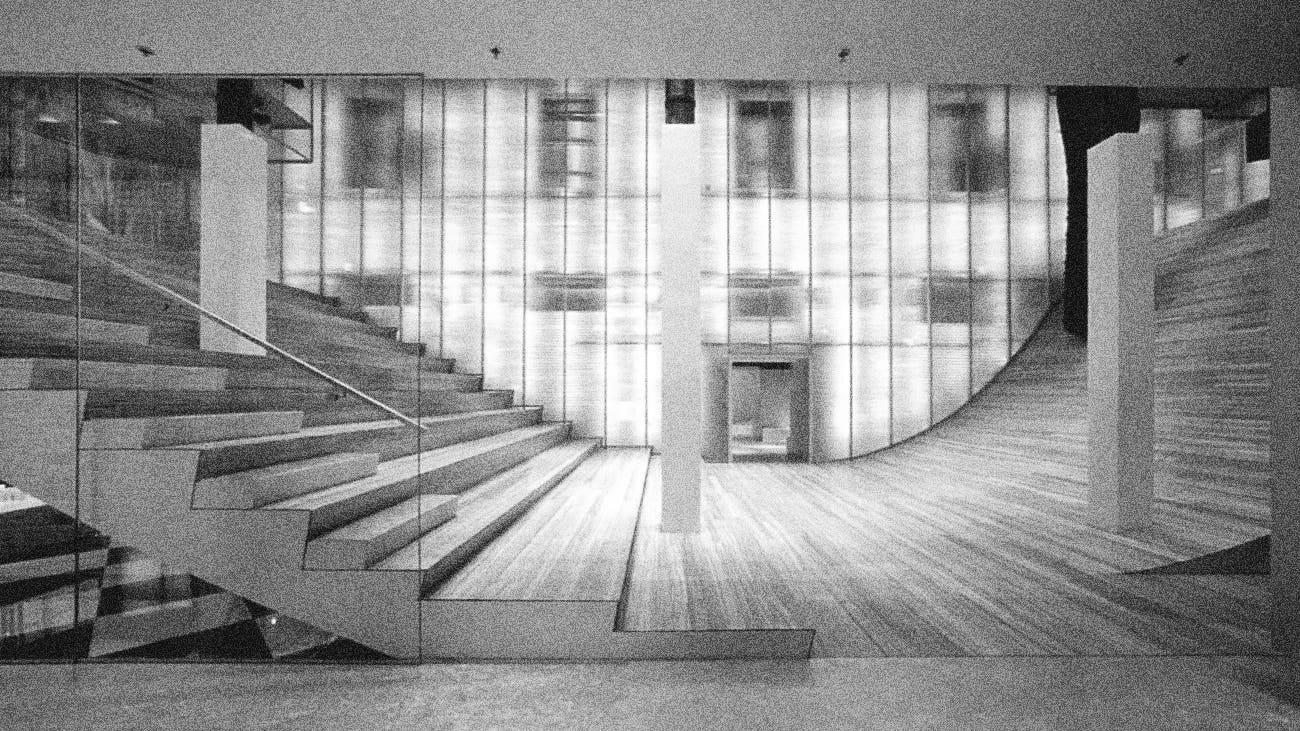
While our cultural environment constantly pressures us to make purchase decisions (open Instagram), this type of store does the opposite: it removes commercial pressure. It behaves more like a museum than a shop: visitors are free to observe, absorb, and leave without buying anything at all. Linger away! “Wasted space,” Koolhaas argues, is the luxury given to audiences.
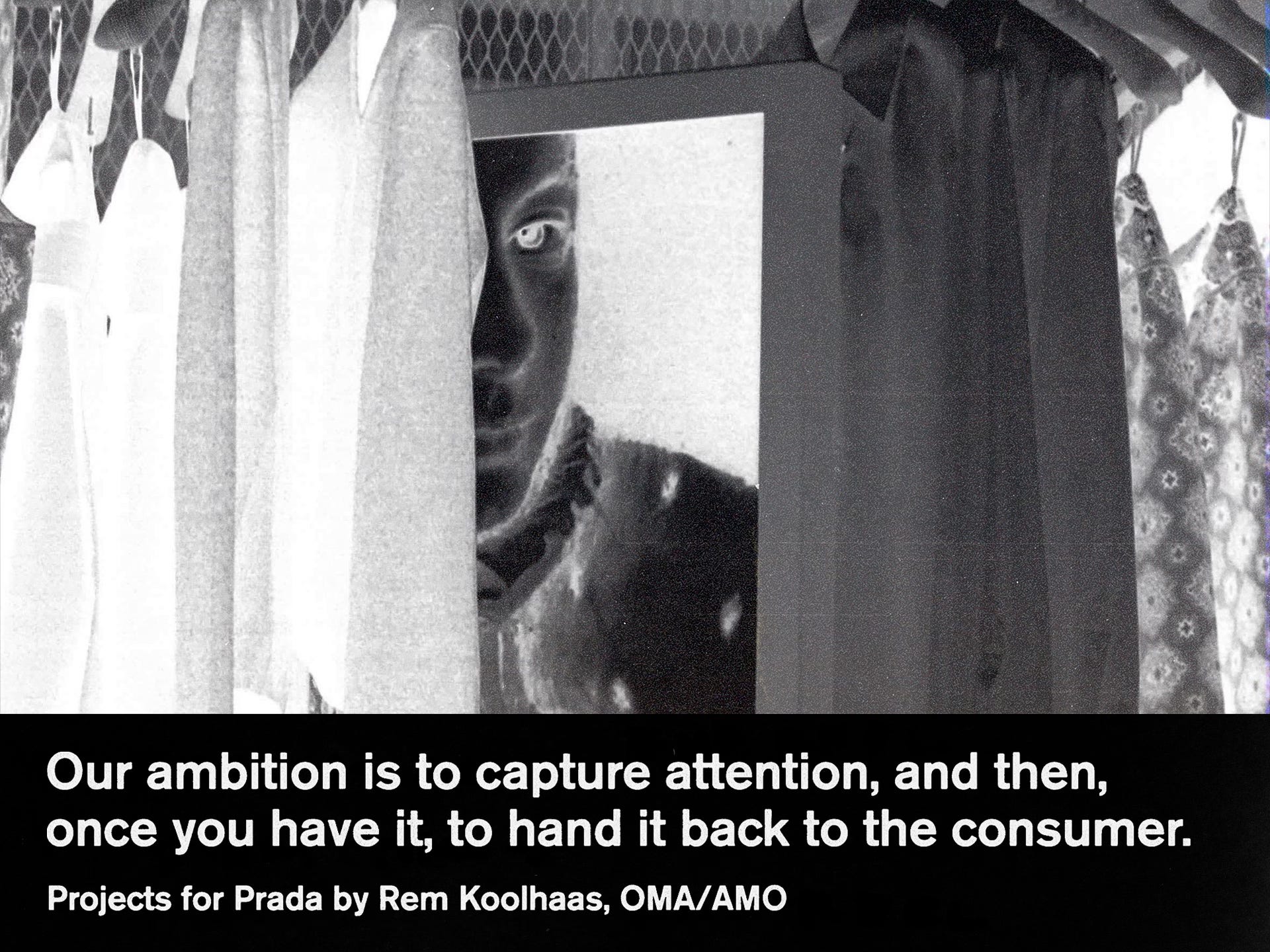
With this framework in mind, I boarded a flight to Seoul to study its most experimental retail environments. With the recent opening of HAUS NOWHERE, a multi-story, multi-brand flagship from Gentle Monster’s parent company IICOMBINED, Seoul is a city uniquely fluent in Koolhaas’ ideas. Few places push them to such artistic extremes.
Across two days of semiotic analysis (aka window shopping), I explored the hip retail neighborhoods of Seongsu-dong, Hannam-dong, and Sinsa-dong. Beyond HAUS NOWHERE, the lineup included Ader Error, Maison Margiela, Recto, LEMAIRE, Blue Elephant, Tamburins, WooYoungmi, Hyein Seo (a favorite of New Jeans), Marge Sherwood, Coor, and Gentle Monster.
As undercover strategist, my macro-observation is that Seoul tends to express the epicenter or flagship in two distinct creative modes:
The first, and more visible, is avant-garde worldbuilding: the retail-museum approach illustrated by the likes of Gentle Monster (obvi). These stores are characterized by gallery-style layouts, large-scale art installations, deliberate lighting, and immersive soundscapes. They spark awe, imagination, and selfies. HAUS NOWHERE, Tamburins, and Ader Error best represent this category.
The second mode is the more reserved, quiet worldbuilding or slice-of-life approach to retail design. These spaces feel domestic and lived-in, shaped by inviting interiors, personal effects, and natural or ambient lighting. They give visitors a physical snapshot of a brand’s aspirational lifestyle. Recto and LEMAIRE embody this.
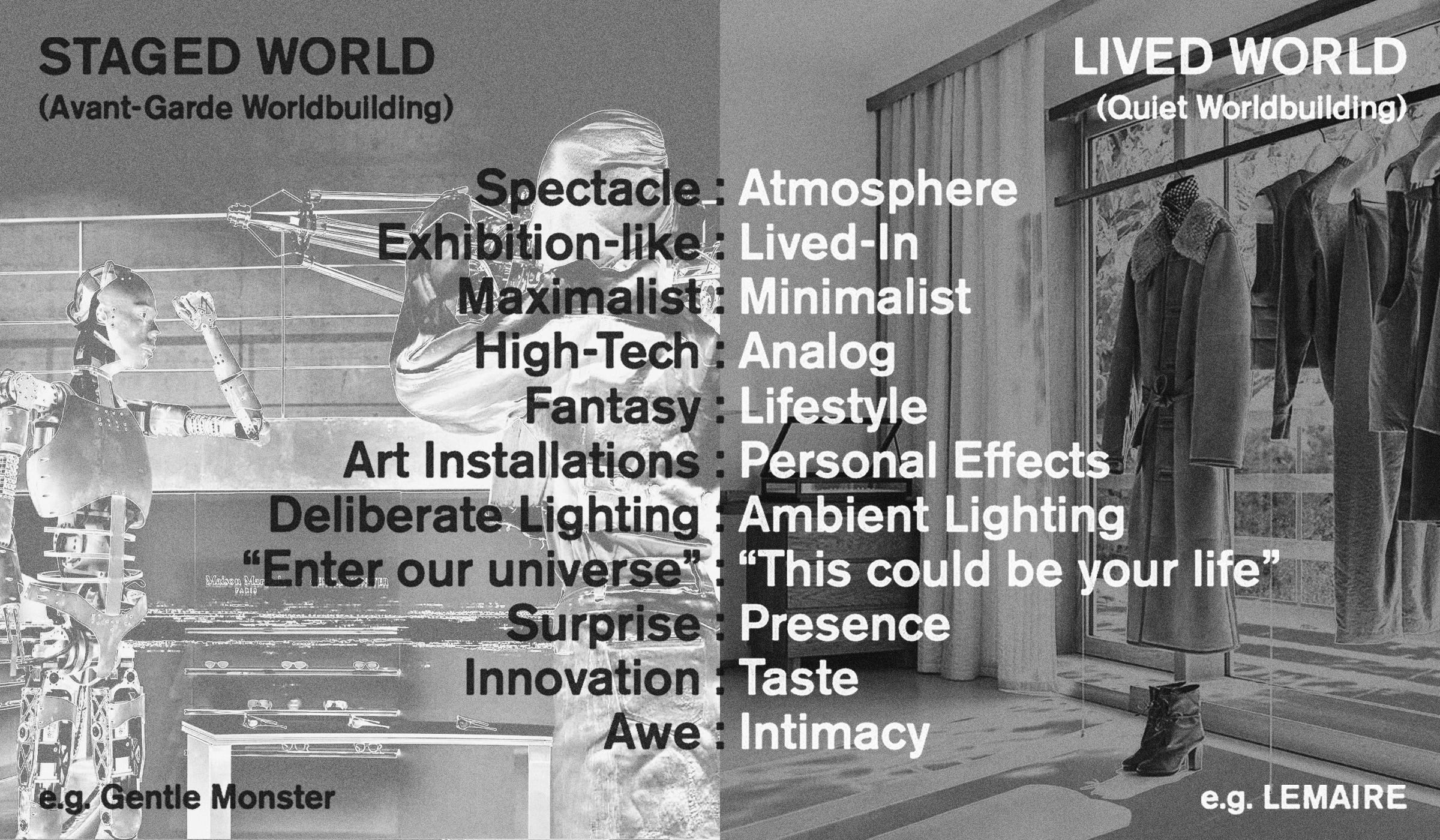
In keeping with Koolhaas’s idea of the epicenter as a site of experimentation, this article will focus on the avant-garde worldbuilding flagships. Quiet worldbuilding deserves its own treatment and will be the focus of my next piece.
After two days of sensory overload, here are the creative lessons that emerge:
1. Product design codes ↔ Environmental design
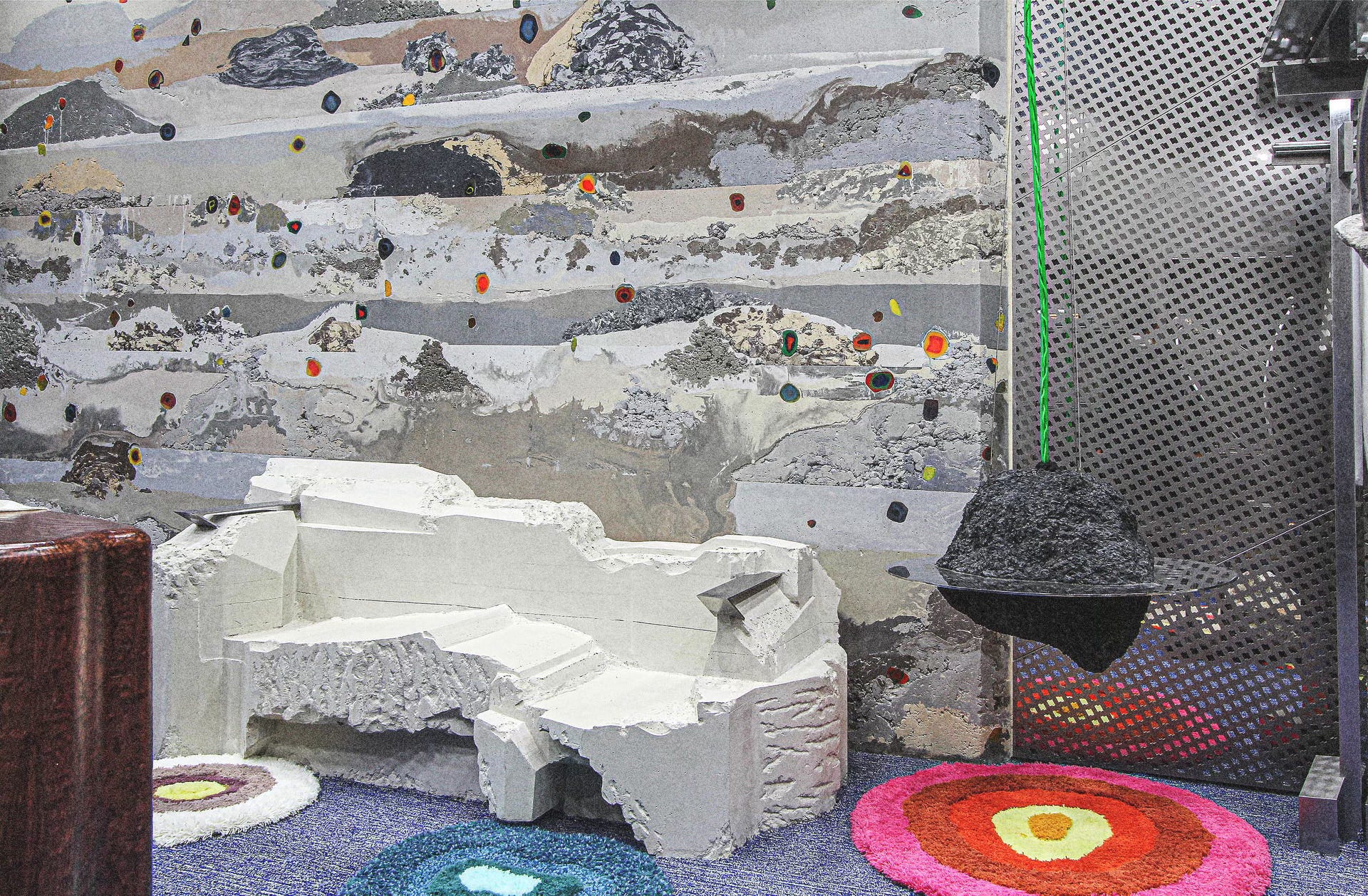
The epicenter store functions as a physical test kitchen, pushing a brand’s design philosophy beyond logo and color. In Seoul, this often results in flagships that lean heavily into large, public art–esque installations. These moments can risk overpowering the product itself; however, that tension resolves when product design codes and environmental design are in active dialogue, when cues from the product inform the space rather than compete with it.
AderError’s flagships model this well. The brand’s design philosophy centers on what it calls “beautiful errors”: asymmetry, mismatched patterns, exaggerated seams, tags and zips placed slightly wrong. That same instinct to break form carries through the store environment: asymmetrical display units, layered structures, unexpected dioramas, and off-kilter sculptures. The space becomes an extension of the brand’s offbeat sensibility rather than a neutral container for over-the-top installations.
Done well, a store can feel grand without making merchandise feel miniature or insignificant. Tamburins’ perfumes, despite their small scale, feel integral to the environment thanks to their sculptural packaging. They read less like products on display and more like elements embedded in the space.
2. Space for playful interjections
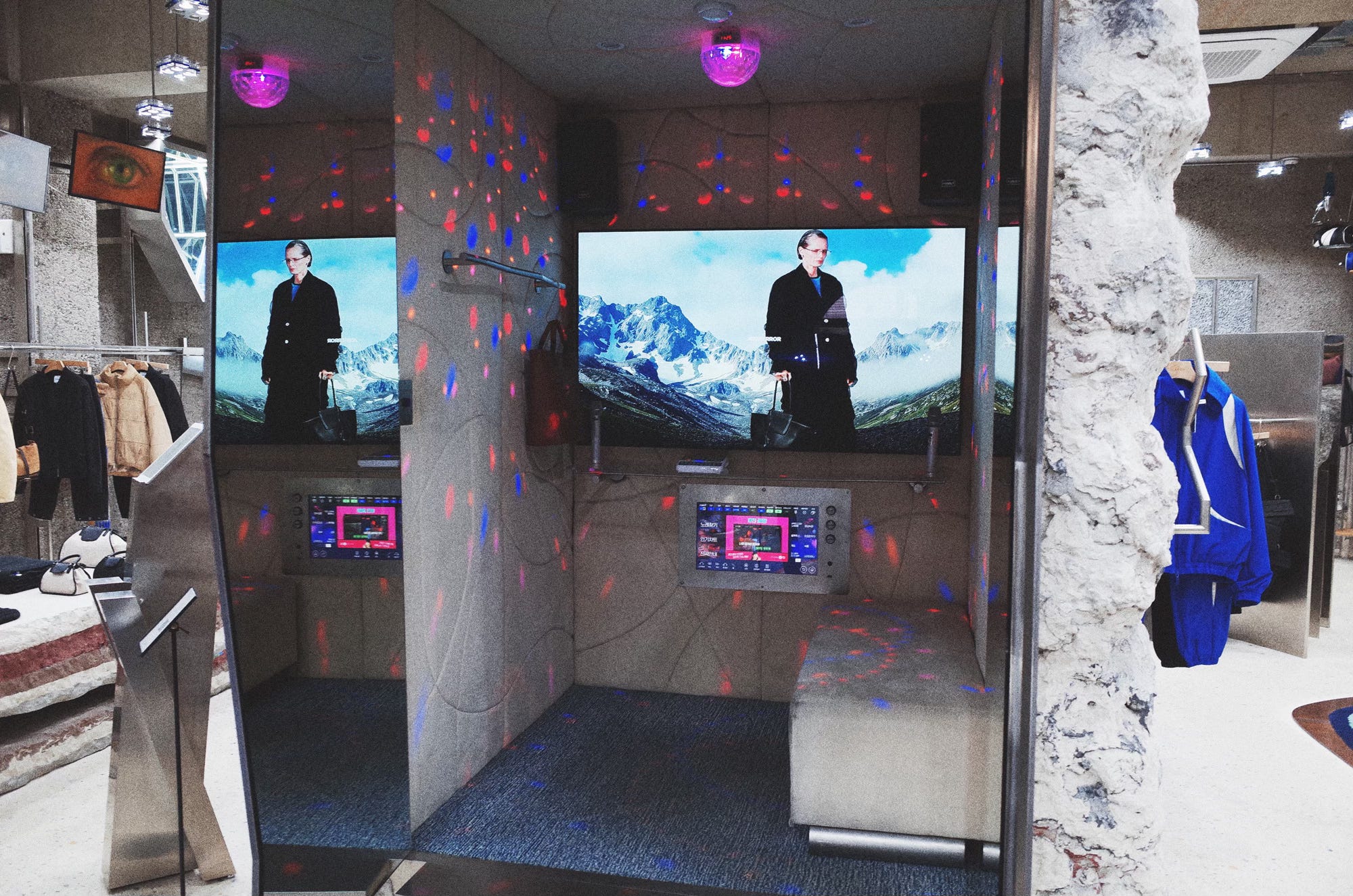
Gentle Monster’s giant, breathing doberman. Maison Margiela’s tabi shoeprints die-pressed into its carpet. AderError’s karaoke fitting room. (My favorite.)
The epicenter store can tip too far into museum territory, overly intellectual, bordering on sterile. Playful interjections cut against that. They create emotional texture in the visitor journey, keep the brand from feeling self-important, and, to bring it back to Koolhaas, keep it from becoming predictable.
In a world that feels heavy, the brick-and-mortar experience doesn’t need to be. A little absurdity goes a long way.
3. Guides > Salespeople
If the epicenter is a museum, what role should staff play?
Traditional salespeople explain without being asked. They hover. Any sign of curiosity gets treated as purchase intent and pushed toward close. In an epicenter store, this energy dilutes the experience. Imagine taking in the Mona Lisa while someone whispers financing options in your ear.
Guides operate differently. Like museum docents, they observe before engaging, offering context when invited and stepping in only when confusion appears. The goal isn’t to close a sale. It’s to read the room.
Too much freedom and visitors feel lost. Too much help and they feel suffocated. The sweet spot sits somewhere in between: a space you can wander through freely, with someone nearby who notices when you’re stuck.
4. In praise of the line
This may be a semi-hot take, but some degree of crowd control improves the individual experience. I don’t mind waiting in line before entering a store, especially if it means my time inside will be a better one. Limiting the number of visitors allows the epicenter to be experienced as intended. Space, sound, and detail register more clearly.
There’s a difference between exploring an amusement park with a select few versus moving through it shoulder-to-shoulder. The former makes you feel special, maybe even chosen. The latter makes you feel like part of a herd.
Controlled entry also acts as a quiet filter. It naturally favors visitors who are genuinely interested and willing to wait, rather than casual passersby or tourists killing time. The result is an atmosphere that protects the integrity of the space.
A little bit of suffering earns the right to a good time, I say.
5. Ye ol’ (brand) coffee shoppe
I used to joke with clients that if they wanted to build “community,” they should open a café. The tactic is hardly new (see Dover Street Market), but in Seoul, a city where café culture is a national pastime, it takes on new weight.
A little caffeine turns a transactional experience into a social one. Introducing a hospitality element turns an epicenter from a one-time visit into a place to return. And for visitors who admire the brand but cannot or choose not to buy, it still offers the emotional payoff of purchasing something.
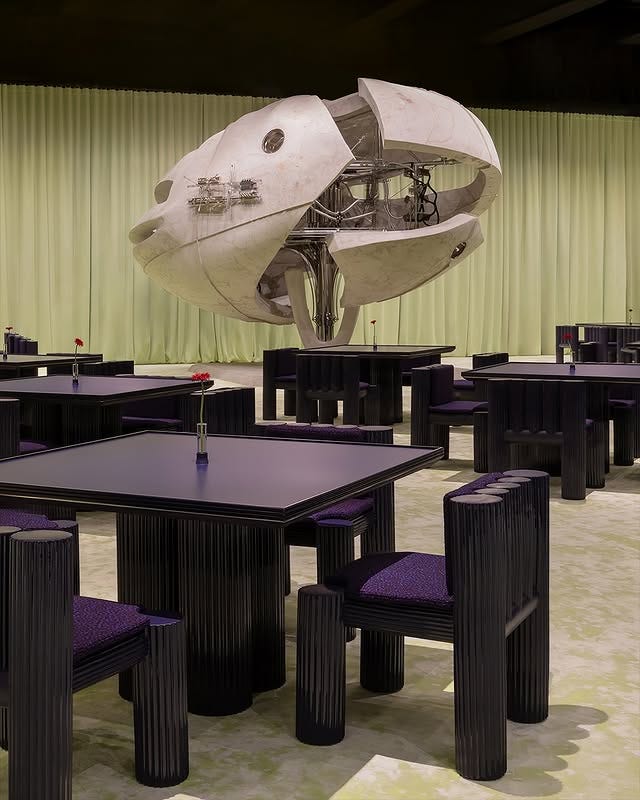
Nudake’s Tea House, perched on the fifth floor of HAUS NOWHERE, is the most fully realized version of this I’ve seen. Think Sketch London, but more cinematic and futuristic in scenic design. After multiple floors of observation, of taking in installations, the Tea House offers a reprieve. You’re no longer just witnessing the spectacle; you’re an active character in it.
The permission to lounge is often what becomes the drawcard long after the spectacle wears off.
Epicenter Stores as Selfie Magnets
My only major criticism, and perhaps a final provocation, is that the avant-garde epicenter store is, by design, a selfie magnet.
Its scale and theatricality attracts brand purists, yes. But also wannabe influencers and straight-up randoms (sorry) who will never buy or aspire to. While we want diversity in audience, a completely random crowd dilutes a brand’s aura. The space begins to feel socially ambiguous. It becomes harder to tell who the brand is truly for and who just wants a backdrop.
Should epicenter stores have door policies as strict as Berghain? Probably not. But they may need subtler forms of filtration. Location is one lever: placing stores outside dense retail zones, where true fans will travel and casual foot traffic falls away. Programming is another: cultural partners and events that speak to a brand’s specific subculture, not a general audience. Access can do the rest, through invitations, limited gatherings, or secret spaces reserved for those already inside the brand’s world.
The challenge going forward is not how many people an epicenter store can attract, but how effectively it can preserve meaning once they arrive.